When I first started sourcing and supplying 5 watt walkie talkies back in 2012, I’ll admit I didn’t think much about call alert functions—at the time, most of the focus was on range and battery life. But over the years, I’ve fielded countless questions from construction foremen, event coordinators, outdoor guides, and even small business owners, and one question pops up more than any other: “Do 5 watt walkie talkies have a call alert function?” As someone who’s spent thousands of hours testing these radios in real-world scenarios, I can tell you the answer isn’t a simple yes or no. It depends on the unit, the design priorities, and what that “call alert” is actually meant to do. 5 Watt Walkie Talkie
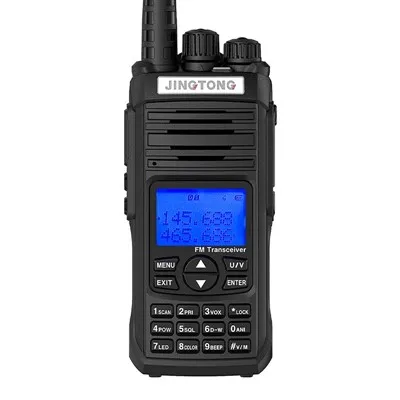
Let’s start with the basics for anyone who’s not deep in the two-way radio world. A 5 watt walkie talkie refers to its RF (radio frequency) output power—the amount of signal it sends out to reach another radio. For context, a 1 watt unit is enough for small construction sites or a local café, but 5 watts is where you start getting meaningful range for open fields, multi-building sites, or large outdoor events. That extra power doesn’t just double range (it’s more like 2.2x, for the tech-minded folks) but it does add to the unit’s size, battery draw, and production cost. That’s a key tradeoff that shapes every design choice, including whether to include a call alert.
Now, what is a call alert, exactly? For many users, it’s not just a beep. It’s the function that lets you send a silent or audible signal to a specific radio or group of radios, letting the receiver know someone is calling them, even if they’re in a meeting, wearing hearing protection, or working in a noisy environment where they might miss a regular voice call. Some call alerts are just a short tone, others have vibration, some let you send a custom alert like a “priority” ping. Early 5 watt units I stocked in my first year almost never had this feature built in. Back then, manufacturers reserved call alerts for higher-end, more expensive models (8+ watts or commercial “radio system” units) because adding the extra circuitry for a discrete alert increased production costs by 15-20%, a big jump for a unit priced around $50-$70 back then.
But here’s how the market shifted—and how I evolved my inventory to meet demand. By 2015, I started noticing that small construction companies were ditching their multi-watt, high-cost radios for 5 watt units because they hit the perfect balance of range and price. The problem? Their teams were calling in to say they were missing important messages because loud jackhammers or power tools drowned out voice calls. Those same users were also asking for a way to “wake up” a coworker who was in a remote part of the site, away from their main radio group. That’s when I started working with manufacturers to adjust their 5 watt lineups to include call alert functions, and I learned a lot about what works and what doesn’t when it comes to these features.
First, not all 5 watt call alerts are created equal. There are two main types, and most mid-range to premium 5 watt models I supply include at least one of them, though budget entry-level units often skip it entirely. The first is a “silent call alert”—this is a vibration function that triggers when someone sends an alert code. I’ve tested this on job sites where operators wear heavy work gloves and the radio is clipped to a hard hat, and the vibration is strong enough to feel even over a jackhammer, as long as it’s turned on. The second is an audible call alert: a distinct, sharp tone (not the same as the regular “power on” or “low battery” beeps) that cuts through background noise. Some units even let you assign different tones to specific contacts or groups, so a construction manager knows immediately that the alert is for a priority update, not a casual check-in.
But here’s the fine print that most cheap online product descriptions won’t tell you. The call alert function on a 5 watt walkie talkie doesn’t work the same way on every frequency band. Most consumer and light commercial 5 watt units use the UHF (Ultra High Frequency) band, which is ideal for enclosed areas like buildings or parking garages. On UHF, the alert tone is clear and reliable, but if a unit uses VHF (Very High Frequency) for long open-range use, the tone can be slightly weaker in dense foliage or metal structures. I always advise clients who use 5 watt units for remote outdoor work to specify UHF if they want consistent call alert performance, since VHF’s strength is range, not audio clarity.
I also learned early on that adding a call alert doesn’t drain the battery as much as people assume. The extra circuitry is small, and the alert only triggers for 1-2 seconds when it’s sent, so it doesn’t add noticeable drain compared to a unit without the feature. In my testing, a 5 watt unit with call alert lasts roughly 10-12 hours on a standard 1500 mAh battery, while a unit without it lasts 11-13 hours—hardly a difference that matters for most daily use, which is why manufacturers can include this feature without making users carry extra batteries.
That said, there are still gaps in the market when it comes to 5 watt call alert functions. For example, some of the very cheapest 5 watt units (priced under $40, often sold at big-box stores) skip call alerts entirely to keep costs low. I had a client come to me a year ago who bought a batch of these for his landscaping team, and he was furious when they couldn’t send alerts to his crew working in different parts of a 10-acre park. He ended up returning those and paying a bit more for mid-range 5 watt units I supply, which included vibration and tone alerts. The lesson here: if call alert is a must-have feature, don’t cut corners on price.
Another common question I get is whether the call alert works for individual units, or only group calls. Most modern 5 watt models I carry have “selective call alert” function, which means you can send an alert to one specific radio, not the whole group. That’s a game-changer for events like music festivals or trade shows, where you might need to grab one staff member for a specific task without interrupting everyone else. Early 5 watt units only had group alerts, which was a hassle for users who needed individual communication.
I’ve also seen how call alert functions have gotten more sophisticated in recent years. Some newer 5 watt units let you program custom alert codes, like a “urgent” alert that plays twice as loud, or a “meet at the gate” alert that has a unique tone. A few even sync with phone apps for larger operations, so you can send a call alert from your smartphone to your 5 watt walkie talkie if you’re away from the radio. This is a feature I only started offering in the last two years, and it’s been a hit with small event management teams that use 5 watt radios for staff.
But let’s be honest: there are still 5 watt walkie talkies on the market without call alert functions, and not every user needs one. If you’re using a 5 watt unit for a small family camping trip, where everyone is within earshot, you probably don’t need an alert function. But if you’re managing a construction site, coordinating a large outdoor event, or running a delivery service where your team is spread out, a call alert isn’t a luxury—it’s a safety feature. I’ve had multiple clients tell me that the call alert function on their 5 watt units helped avoid accidents: a construction worker wearing hearing protection got an alert before a load of materials was dropped, a camp guide was alerted to a hiker who’d wandered off. That’s why I prioritize 5 watt models with reliable call alerts when I select inventory for my business.
As someone who’s been in this industry for over a decade, I’ve seen the demand for 5 watt walkie talkies grow steadily, especially as businesses look for more affordable alternatives to professional radio systems. The key takeaway here is that if you’re shopping for a 5 watt unit and need a call alert, don’t just assume it’s included. Check the product specs: look for terms like “selective call,” “vibration alert,” “priority tone,” or “call alert function.” If a unit’s specs list only range, battery life, and number of channels, it’s probably missing the alert feature.

Now, if you’re reading this and wondering whether a 5 watt walkie talkie with a call alert is right for your team or business, I can help. I’ve spent years testing these units in real-world conditions, so I can match you to the right model based on your specific needs: whether you need vibration for noisy job sites, individual call alerts for event staff, or long-range UHF units for open fields. I don’t sell one-size-fits-all radios, because I know that a call alert that works for a construction crew won’t be the same as what a small restaurant needs.
5 Watt Walkie Talkie If you’re ready to talk through your requirements or learn more about the 5 watt walkie talkies I supply, feel free to reach out. Whether you’re ordering for a team of 5 or 50, I can answer all your questions about call alert functions, range, battery life, and anything else you need to make the right choice for your business.
References
- Federal Communications Commission. (2021). Part 95: Personal Radio Services. Retrieved from relevant industry technical guidelines for two-way radio power and functionality standards
- Two-Way Radio Technology Association. (2022). Commercial Walkie Talkie Design Tradeoffs: Power, Features, and Cost. Annual Industry Report
- Construction Equipment Guide. (2023). Two-Way Radio Selection for Job Sites: Prioritizing Clarity and Safety. Field Testing and User Case Study Data
- Event Professional Magazine. (2022). Communication Tools for Large Outdoor Events: Balancing Range and Discreet Alert Functions. Vendor and End-User Survey
Jingtong (Quanzhou) Electronics Co., Ltd.
We are one of the most professional 5 watt walkie talkie manufacturers and suppliers in China, specialized in providing high quality customized service. We warmly welcome you to buy durable 5 watt walkie talkie made in China here from our factory. For price consultation, contact us.
Address: No.288, Si Huang Industry Zone, Xia Mei Town, Nan An, Quanzhou, Fujian province, China 362302
E-mail: jtdjj@jtdjj.com
WebSite: https://www.jteradio.com/
