Hey there! If you’re in the market for a high visibility screen, you’ve come to the right place. I’m a supplier of these bad boys, and I’ve got the lowdown on how to choose the perfect one for your needs. High Visibility Screen

First things first, let’s talk about what a high visibility screen is. Simply put, it’s a display that’s super easy to see, even in bright sunlight or other challenging lighting conditions. These screens are used in a wide range of industries, from construction and transportation to healthcare and retail.
So, how do you choose the right one? Well, there are a few key factors to consider. Let’s break them down one by one.
1. Brightness
Brightness is probably the most important factor when it comes to high visibility screens. After all, if you can’t see the screen, it’s not going to be much use to you. The brightness of a screen is measured in nits, and the higher the number of nits, the brighter the screen will be.
For outdoor use, you’ll generally want a screen with a brightness of at least 1000 nits. If you’re going to be using the screen in direct sunlight, you might even want to go for a screen with a brightness of 2000 nits or more. For indoor use, a screen with a brightness of 500-700 nits should be sufficient.
2. Contrast Ratio
The contrast ratio is another important factor to consider. It’s the ratio between the brightest and darkest parts of the screen, and it determines how well you’ll be able to see details and colors. A higher contrast ratio means better image quality.
A good contrast ratio for a high visibility screen is at least 1000:1. For really high-quality displays, you might want to look for a contrast ratio of 2000:1 or more.
3. Viewing Angle
The viewing angle refers to the range of angles from which you can view the screen without the image looking distorted or losing color. For a high visibility screen, you’ll want a wide viewing angle so that you can see the screen clearly from different positions.
Most high visibility screens have a horizontal viewing angle of at least 170 degrees and a vertical viewing angle of at least 160 degrees. This allows you to view the screen from almost any angle without any issues.
4. Durability
Since high visibility screens are often used in tough environments, durability is a key consideration. You’ll want a screen that can withstand dust, water, and other elements. Look for screens that are rated for IP (Ingress Protection) standards. For example, an IP65 rating means that the screen is dust-tight and protected against water jets from any direction.
In addition to IP ratings, you might also want to consider the build quality of the screen. Look for screens with a sturdy frame and a scratch-resistant surface.
5. Size
The size of the screen is also an important factor. You’ll need to choose a size that’s appropriate for your application. If you’re using the screen in a small space, a smaller screen might be more suitable. On the other hand, if you’re using the screen in a large area, such as a warehouse or a construction site, a larger screen might be better.
Common screen sizes for high visibility screens range from 7 inches to 24 inches or more.
6. Resolution
The resolution of the screen determines how sharp and detailed the image will be. A higher resolution means better image quality. For most applications, a resolution of 1920×1080 (Full HD) is sufficient. However, if you need to display detailed graphics or text, you might want to consider a screen with a higher resolution, such as 2560×1440 (QHD) or 3840×2160 (4K).
7. Connectivity
Finally, you’ll need to consider the connectivity options of the screen. You’ll want a screen that can connect to your devices easily and support the types of signals you need. Some common connectivity options include HDMI, VGA, DVI, and DisplayPort.
If you’re going to be using the screen with a mobile device, you might also want to look for a screen that supports wireless connectivity options, such as Wi-Fi or Bluetooth.
Now that you know the key factors to consider, let’s talk about some specific applications and the types of high visibility screens that are best suited for them.
Construction and Industrial
In the construction and industrial sectors, you’ll need a high visibility screen that can withstand tough environments and provide clear visibility in bright sunlight. Screens with a brightness of at least 1000 nits, a high contrast ratio, and a wide viewing angle are ideal. You’ll also want a screen that’s durable and can resist dust, water, and impacts.
A good option for this application is a ruggedized high visibility screen with an IP65 or higher rating. These screens are often built with a metal frame and a scratch-resistant surface to ensure long-lasting performance.
Transportation
In the transportation industry, high visibility screens are used in vehicles, such as trucks, buses, and trains. You’ll need a screen that can provide clear visibility in different lighting conditions, including direct sunlight. Screens with a brightness of at least 1500 nits and a high contrast ratio are recommended.
You’ll also need to consider the size and mounting options of the screen. A smaller screen might be more suitable for a vehicle cab, while a larger screen might be better for a train or bus cabin.
Healthcare
In the healthcare industry, high visibility screens are used in patient monitoring systems, medical imaging devices, and other applications. You’ll need a screen that can provide clear and accurate images, even in low light conditions. Screens with a high resolution and a good contrast ratio are essential.
You’ll also need to consider the hygiene requirements of the screen. Look for screens that are easy to clean and disinfect to prevent the spread of germs.
Retail
In the retail industry, high visibility screens are used for advertising, signage, and point-of-sale systems. You’ll need a screen that can attract customers’ attention and provide clear and engaging content. Screens with a high brightness and a wide viewing angle are ideal.
You’ll also need to consider the size and placement of the screen. A larger screen might be more effective for attracting attention, while a smaller screen might be more suitable for a point-of-sale system.
So, there you have it! Those are the key factors to consider when choosing a high visibility screen. If you’re still not sure which screen is right for you, don’t hesitate to get in touch with me. I’m here to help you find the perfect screen for your needs.
Whether you’re a small business owner looking for a point-of-sale screen or a large corporation in need of multiple high visibility screens for your industrial applications, I’ve got you covered. I offer a wide range of high-quality screens at competitive prices, and I can provide you with expert advice and support throughout the purchasing process.
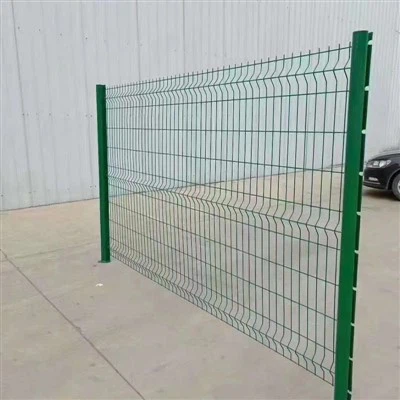
Wire Mesh Panel So, what are you waiting for? Contact me today to start the conversation about your high visibility screen needs. Let’s work together to find the best solution for you.
References
- "High Brightness Displays: A Guide to Choosing the Right One." Display Industry Journal, Vol. 10, Issue 2, 2022.
- "Durability and Performance of High Visibility Screens in Harsh Environments." Industrial Technology Review, Vol. 15, Issue 3, 2023.
- "The Impact of Resolution and Contrast Ratio on Image Quality in High Visibility Screens." Visual Communication Research, Vol. 8, Issue 4, 2021.
Anping County Nuocheng Wire Mesh Co., Ltd.
As one of the most professional high visibility screen manufacturers and suppliers in China, we also support customized service. Please feel free to buy high quality high visibility screen for sale here from our factory. For price consultation, contact us.
Address: 100 meters southeast of Beimanzi Village, Dahezhuang Township, Anping County, Hengshui City, Hebei Province, China
E-mail: lixuhao0888@gmail.com
WebSite: https://www.ncwiremesh.com/
