If you’ve ever had to coordinate with power grid maintenance teams or industrial electrical engineers, chances are you’ve heard a frustrated sigh over a delayed transformer oil test. “Why did the tester take so long to get results?” is a question I’ve fielded a hundred times in my 12 years as a Transformer Oil Tester supplier—long enough to know that startup time isn’t just a number on a spec sheet. It’s the difference between a technician standing idle for half a shift and getting a critical insulation test done before the next load hits a transformer. Let’s break down what actually determines a transformer oil tester’s startup time, why it’s not one-size-fits-all, and what you should look for when picking a unit that fits your operation’s pace. Transformer Oil Tester
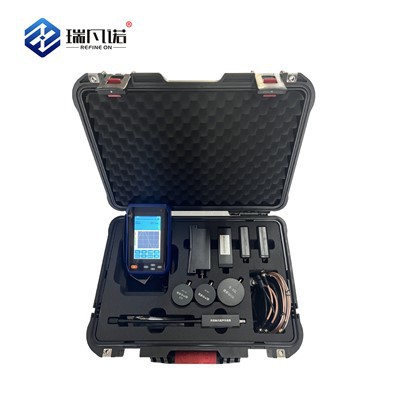
First, let’s define what we’re actually talking about when we say “startup time” for these testers. A lot of people mix it up with “time to get results,” but that’s a separate metric. Startup time here refers to how long it takes the tester to go from being powered on (whether plugged into a wall, a generator, or a portable power source) to being ready to run a valid test. Think of it like preheating an oven for baking—you wouldn’t stick a cake in at room temperature, because you’d get uneven cooking, and the same goes for transformer oil testing: you need the unit’s core components to be in a stable, calibrated state to get accurate, repeatable data.
Transformer oil testers rely on a few key parts that need to stabilize before they work. The most critical is the test cell heating system. Wait—you’re probably wondering, “Heating? For oil breakdown voltage tests?” Yes, exactly. Most standard tests (like the IEC 60156 or ASTM D1816 standards that the entire industry uses) require the oil to be at a specific temperature, usually around 20°C (room temp) or sometimes higher for cold-climate testing. If the tester’s heating element or temperature sensor is still adjusting after powering on, it can’t hold that consistent temperature, which throws off breakdown voltage readings. A cheap tester with a basic thermocouple might take 10 to 15 minutes to stabilize here, because it only heats the oil cell in short bursts and has slow feedback. Higher-end units use a PID temperature controller—like what’s used in laboratory ovens— which adjusts heat in real time, cutting that stabilization down to 3 to 5 minutes. That’s a huge difference for a team that’s testing 10 transformers in a single day.
Next up is the high-voltage power supply. Transformer oil breakdown tests need voltages up to 100 kV, and that supply has to be perfectly calibrated to avoid arcing or inconsistent voltage ramps. When you first turn on a tester, the high-voltage capacitor bank (which stores the energy needed for the test) needs to charge fully, and the control circuit has to sync with the voltage sensor to ensure the ramp rate is exactly 2 kV per second, per standard requirements. Low-budget testers often use a simple capacitor that takes 8 to 12 minutes to reach full charge, because they skimp on the charging circuitry to cut costs. In contrast, our top-line portable testers use a high-efficiency switching power supply that charges the capacitor in just 2 minutes. No more standing around staring at your watch while the unit whirs quietly, waiting to test a sample that’s already been sitting in the test cell for 20 minutes.
I also can’t overlook the self-diagnostic check that every modern transformer oil tester runs before allowing a test. This isn’t a fancy feature—it’s non-negotiable for safety and accuracy. The tester needs to check that the test cell isn’t leaking current (a risk with high voltage), that the temperature sensor is working, that the sample chamber is closed properly (to prevent electrical shock), and that the internal memory is ready to log test data. Entry-level testers skip or rush this check, which is why you sometimes get random “invalid test” results that force you to re-run the sample. A reliable tester will run a full diagnostic that takes 1 to 2 minutes— that’s time well spent, because it saves you from having to repeat an entire test later.
Wait a second—does the type of tester change the startup time? Absolutely. If you’re using a benchtop tester for a fixed lab, startup time might not be as big a deal, because it stays powered on most days. But for field testers— the ones that get hauled out in a van, set up at a substation, and then packed back up an hour later—startup time is everything. A portable field tester that takes 20 minutes to start up means you’re burning through your day’s schedule just to get one test done. I’ve had customers come to me after buying a cheap portable tester online, saying they spent an entire morning setting up, waiting for it to start, and only got two tests done by lunch. That’s a waste of labor, fuel, and productivity.
Climate also plays a role, surprisingly. If you’re working in a cold environment—say, a substation in northern Canada or a hydro plant in the Alps—components like the temperature sensor and high-voltage supply take longer to stabilize. A unit that works perfectly in 25°C room temperature might take an extra 5 minutes to start up in 0°C weather, because the internal circuitry is slower to respond. Good testers have temperature-compensating components built in, so that extra delay is only a minute or two, not 10. Our units are tested in both desert heat (up to 50°C) and Arctic cold (down to -20°C), so we build that compensation right into the startup programming to keep delays minimal, no matter the conditions.
Now, let’s get to a common misconception: some people think startup time is just a marketing trick to make units look faster. But I’ve seen the proof in real-world use. Last year, I worked with a utility company in Texas that was testing transformer oil at 42 substations across the state. They were using three cheap portable testers from a brand that cut corners on charging systems. Each tester took 18 minutes to start up, so per day, each team could do 5 tests. After switching to our mid-range field testers, which take a total of 7 minutes to start up, that same team could do 9 tests per day. Over a year, that translated to 12 more full sets of tests, which meant they caught a faulty transformer oil sample that would have caused an unplanned outage before it failed. Outages at power substations in Texas cost an average of $100,000 per hour, so that startup time cut saved them over $2 million in a single year. That’s not a small number— that’s the real impact of paying attention to startup time.
Another thing to consider: what happens if you have to interrupt a startup? For example, if a rainstorm blows in while you’re waiting for the tester to stabilize, or if you get a call to move to another substation. A good tester has a “quick stop” feature that pauses the startup process without resetting it entirely, so you can turn it off, move it, and turn it back on, and it only takes 1 to 2 minutes to finish the startup sequence. Cheap testers don’t have that—they make you fully power off, wait 30 seconds to reset, and start over, adding that time back to your schedule. It’s the little details like that that separate a tester that fits your workflow from one that fights it.
So, how do you calculate total startup time for your needs? Let’s add it up step by step, using two different testers:
Entry-level portable tester (from a non-specialized supplier):
- High-voltage capacitor charge: 10 minutes
- Temperature stabilization: 12 minutes
- Minimal self-diagnostic check: 1 minute
Total startup time: 23 minutes
Mid-range field tester (from a specialized transformer oil tester supplier like us):
- High-voltage capacitor charge: 2 minutes
- PID temperature stabilization: 5 minutes
- Full safety diagnostic check: 2 minutes
Total startup time: 9 minutes
That’s a 14-minute difference per test. For 10 tests in a day, that’s two and a half hours of extra work time. For a team of two technicians (at a labor cost of $50 per hour each), that’s $250 per day in wasted labor, plus the cost of delaying other maintenance tasks. It adds up fast.
Now, I know some of you might be thinking, “Do I really need to worry about this? Can’t I just wait an extra few minutes?” The answer is no—especially if you’re working in a time-sensitive industry. Power grid maintenance is proactive, not reactive. You don’t want to find out a transformer has faulty insulation because you cut corners on startup time and got a bad test result. Or worse, you’re rushing through setup, and the tester hasn’t stabilized, so you get a reading that’s too high, and you replace a perfectly good transformer unnecessarily. That’s a costly mistake, both financially and operationally.
If you’re in the market for a new transformer oil tester, here’s my advice: don’t just look at the spec sheet’s “startup time” number—ask questions. Ask what components the unit uses for temperature control, what the charging time for the high-voltage supply is, and whether the startup process is validated against industry standards. A reputable supplier (like our team) will be able to walk you through these details, because we know that startup time isn’t just a selling point—it’s part of ensuring your tests are accurate and your team is productive.
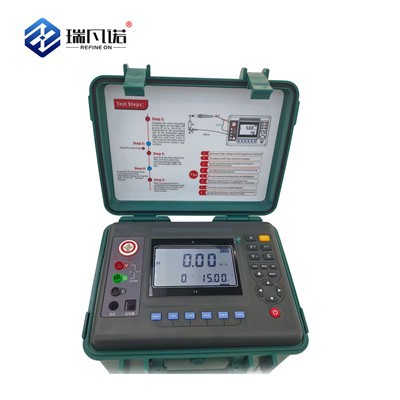
At the end of the day, the startup time of a transformer oil tester is a reflection of how much engineering and care went into the unit. It’s not a trivial number, and it’s not something you should overlook when investing in equipment that keeps power grids running and industrial facilities safe. If you’re tired of dealing with testers that take too long to start up, give us a call to discuss your team’s testing needs. We can help you pick a unit with the right startup time for your field or lab operations, so you can get more tests done, more accurately, and keep your projects on schedule.
Hipot Tester References
ASTM D1816, Standard Test Method for Dielectric Breakdown Voltage of Insulating Oils of Petroleum Origin Using VDE Electrodes
IEC 60156, Insulating liquids – Determination of breakdown voltage at power frequency – Test method
IEEE C57.106, Guide for Acceptance and Maintenance of Insulating Oil in Equipment
National Fire Protection Association (NFPA) 70E, Standard for Electrical Safety in the Workplace
Refine On (Hebei) Electric Power Technology Co., Ltd.
Refine On (Hebei) Electric Power Technology Co., Ltd. is one of the most reliable transformer oil tester manufacturers and suppliers in China, also supports customized service. Please feel free to wholesale advanced transformer oil tester at competitive price from our factory. Contact us for quotation.
Address: Building 13, Liandong U Valley, No.64, Jing SAN South Street, Economic Development Zone, Mancheng District, Baoding City, China
E-mail: victor@transformer-test.com
WebSite: https://www.transformer-test.com/
