What’s the working principle of a water-lubricated oil-free screw air compressor? If you’ve ever spent time around industrial air systems, you’ve probably run into the oil-lubricated, oil-flooded kind before—those ones that leak a little oily condensate, need constant oil top-ups, and require regular oil separations to keep air lines clean. But if you’re here because you’re tired of that hassle, you’re in the right spot. As someone who’s been supplying these bad boys for years, I get that most people don’t really know what makes a water-lubed, fully oil-free screw compressor tick. It’s not rocket science, but there’s a lot that sets it apart from the old-school models, and understanding how it works is the first step to figuring out if it’s a good fit for your operation. Let’s break this down like I’d explain it to a regular guy at a trade show—not a stuffy engineer in a white coat. Water-Lubricated Oil-free Screw Air Compressor
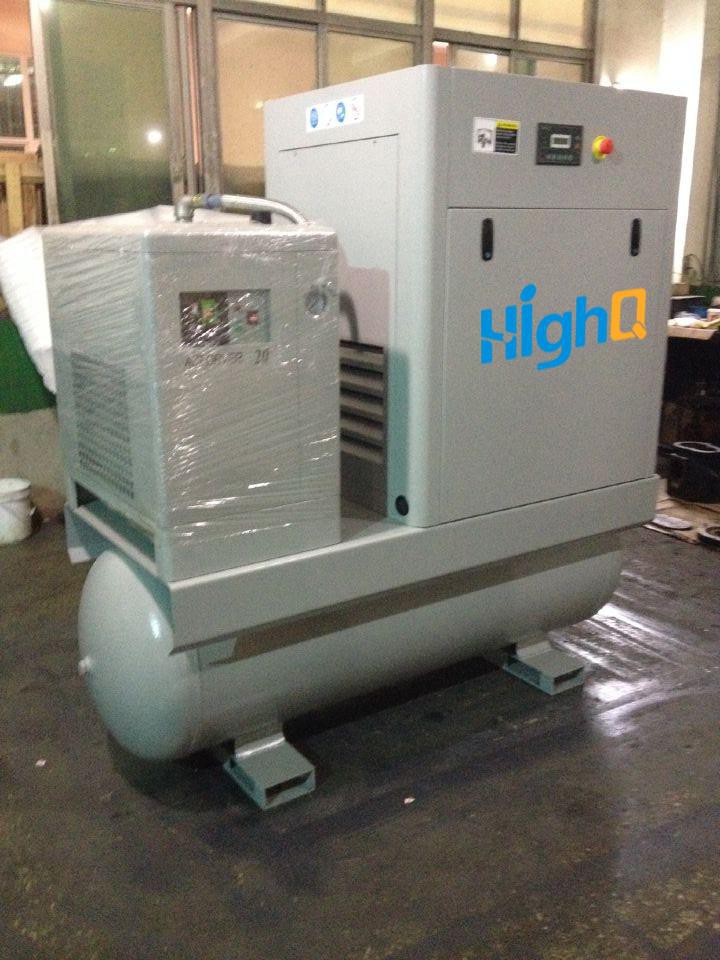
First off, let’s start with the basics: what even is a screw air compressor? At its core, it’s got two interlocking helical rotors—usually called male and female rotors, or the drive and driven rotors, if you want to keep it simple. When those rotors spin, they suck in air, trap it in the gaps between their lobes and the compressor housing, and squeeze that air until it’s at your desired pressure. That’s the same for every screw compressor, oil-lubed or water-lubed. The big difference? What we use to lubricate, seal, and cool those rotors. For the old oil-flooded units, that’s mineral oil or synthetic oil—for our models, it’s straight-up clean water. No oil, no messy separators, no cross-contaminating your air supply. Makes sense why so many food and beverage, pharmaceutical, or electronics manufacturing teams are switching to these, right? Because if you’re making packaged food or semiconductors, you can’t have oil sneaking into your process air.
Let’s walk through the step-by-step working, so it sticks. First, the intake. When the compressor kicks on, the drive rotor (the male one, attached to the motor) starts spinning, and it meshes with the female rotor. As those lobes pull apart as they spin, they create a low-pressure zone right at the intake port. That’s where atmospheric air gets pulled in—filters catch all the dust and particulates first, so you don’t get gunk in the rotors, but that’s a standard part no matter the compressor. Now, here’s where the water part kicks in immediately. As soon as the air is trapped in the first lobe gap between the two rotors, we inject a tiny, controlled amount of clean, filtered water into that cavity. Wait, why water instead of oil? Oil is great for lubrication, but it’s terrible at heat transfer. Water has way higher thermal conductivity than oil—like, almost 4 times higher? That means it cools the compression chamber way faster, so we don’t get super high temperatures inside the compressor. Hot air expands, so if you don’t cool it down, you need more energy to reach your target pressure. That’s efficiency win number one.
But water does more than cool things down. It’s the main seal between the rotors and the housing, and between the two rotors themselves. In an oil-flooded screw compressor, the oil fills the tiny gaps between the lobes, so air can’t leak back past and reduce efficiency. We can’t use oil here, so water does that job perfectly. It forms a thin, continuous film that seals all the micro-gaps. No seal means internal leakage, which means you have to run the motor harder to make the same amount of air. So that water film isn’t just a nice extra—it’s critical for keeping the compressor efficient. Also, it lubricates the rotors. Wait, hold on—if you don’t have oil, why don’t the rotors grind together? Because that thin water film between them keeps their metal surfaces separated. The friction is minimal, and since we’re only using clean water, there’s no sludge or varnish building up on the rotors like there is with old oil. That’s a huge maintenance win.
Next comes the compression stage. As the rotors keep spinning, the lobe gaps get smaller and smaller—trapping that air, plus the water we injected, and squeezing both together. Now, since we’re dealing with air and water, not air and oil, we have to adjust a few things to make sure we don’t end up with a mess at the exhaust. The pressure builds up as we move the trapped air and water along the rotor length, and when the gap reaches the exhaust port, the compressed air and water are pushed out into a separator unit. Wait, not an oil separator—this is a water separator. Because we don’t have oil to separate, the work is way simpler. The exhaust mixture goes into a tank that slows the flow down; the water (which is heavier than air) sinks to the bottom, and the compressed clean air rises to the top.
Now, what happens to that water? We don’t just dump it—we recycle almost all of it. That’s another efficiency thing. The water we pulled out of the separator gets filtered again (to catch any tiny particulates that snuck through) and cooled back down to its original injection temperature (usually around ambient temp, so it’s ready to go back into the compression chamber). Only a tiny amount of water is lost to condensation in the air lines or evaporates during operation, so you only need to top up the reservoir every few months, not every day like you’d top up an oil sump. No changing 50-gallon drums of oil every quarter, no disposing of hazardous oily wastewater—huge cost savings and way better for the environment.
Wait, let’s address a common question people ask: “Can water really handle the compression pressure?” I get it, when you hear “water” and “air compressor” together, your brain goes, “What if it freezes? What if it mixes badly?” Let’s put that to rest. The compression pressure here is usually between 100 and 150 PSI for standard industrial models, way lower than the pressure at the bottom of the ocean, and way below the boiling point of water (which would be at 212°F at sea level, but even at higher pressures inside the compressor, water stays liquid way longer). And we control the injection rate perfectly—our units are calibrated to inject exactly the right amount of water, not too much (which would make the separator work harder) and not too little (which would cause the rotors to rub together). The motor on these compressors is also sized correctly to handle the torque, since we’re not fighting oil-related drag or heat. That’s why they’re 10-15% more energy efficient than comparable oil-flooded units.
Another thing: the design of the rotors themselves. A lot of people think that because we’re using water, the rotors need special coating or material, but no—most of our units use high-grade stainless steel or cast iron with a corrosion-resistant coating, and the water prevents rust from forming. Wait, let’s be real, if you leave metal sitting in water, it will rust. But since we’re recycling the water and it’s filtered, plus the compressor is a sealed system (no outside air getting in except what goes through the intake filter), rust is basically non-existent. And unlike oil, which can break down over time and form harmful byproducts, water doesn’t degrade. It’s just H2O—you could drink it, filtered properly, no problem. That’s why the air coming out is 100% oil-free, no trace of oil aerosols or vapors. Which is a game-changer for industries where air quality is non-negotiable.
Let me also clear up a misconception: “oil-free” doesn’t mean zero lubrication. All screw compressors need some kind of lubrication to keep moving parts from grinding. The oil-flooded ones use oil for that, we use water. That’s the key difference. It’s not some fancy new technology that’s unreliable—water-lubricated screw compressors have been around for decades, but only recently have they become efficient enough and affordable enough for small to mid-sized operations. Back in the day, they had issues with leakage or water carryover, but modern design tweaks—like tighter rotor tolerances, better water filtration systems, and precision injection controls—fixed all that. Now, you get the same, if not better, performance than oil units, without the hassle.
So to recap how this works, in super simple terms:
- Air is pulled in through an intake filter, as two interlocking rotors spin to create a low-pressure zone.
- Clean, filtered water is injected into the compression chamber, where it seals gaps, cools the air, and lubricates the rotors.
- The rotors squeeze the air (and water) until it reaches your target pressure.
- The compressed air and water are pushed out into a water separator, where air rises and water sinks.
- The water is filtered, cooled, and recycled back into the system; the oil-free compressed air is sent to your facility.
No oil changes, no oil separators to replace, no oily condensate to haul away. That’s the biggest draw, but there’s more. These compressors also run quieter than oil-flooded ones, because water dampens noise way better than air or oil. No more hearing a 70-decibel roar all day in your plant—our units clock in around 60 decibels, like a normal conversation. That’s easier on your workers, no need for ear protection if you don’t want it, and less strain on your facility’s soundproofing.
Now, I know what you’re thinking: “But what about maintenance? If I switch to this, will I have to learn a whole new system?” Nope. Maintenance is minimal. You’ll change the air filter annually, check the water quality every few months (just a simple test strip, like you’d use for a fish tank), and top up the reservoir when needed. That’s it. Compare that to oil units, where you have to change the oil every 2,000 hours, replace the oil separator every 6,000 hours, dispose of hazardous waste, and monitor oil levels daily. Not to mention, if you have an oil leak, you’re looking at downtime to fix it, plus possible damage to your end products. With our water-lubed units, there’s no oil leak to worry about.
If you’re still on the fence, think about the long-term costs. Yeah, the upfront price is a little higher than a used oil compressor, but over 5 years, you’ll save thousands on oil, filter changes, hazardous waste disposal, and energy bills. Since these units are more energy efficient, your electricity costs go down by 10-15% every month. That adds up fast. And if quality is important to your brand—say you’re in food packaging, pharmaceuticals, or automotive painting—being able to say your air is 100% oil-free is a big selling point for your customers.
I’ve been working with these compressors for years, talking to all kinds of manufacturers, and the number one complaint I hear about oil units is the mess. Oily condensate dripping on the floor, staining concrete, clogging drains, ruining products. With water-lubed units, the condensate is just clean water—you can pour it down the drain without any special treatment. That’s not just convenient, that’s better for the planet. No more sending hundreds of gallons of hazardous waste to disposal every year, which is not only expensive but bad for your company’s sustainability goals.
At the end of the day, the working principle of a water-lubricated oil-free screw air compressor isn’t that complicated. It’s a smarter take on the same basic screw compression design, swapping oil for water to eliminate all the downsides of oil. You get cleaner air, lower energy costs, less maintenance, less waste, and a quieter operation. If you’re tired of dealing with oil-related headaches, it’s definitely worth a closer look.

If you’re ready to chat more about how this works for your specific operation, or want to get a quote tailored to your air needs, reach out to our team. We’ll walk you through the details, answer all your questions, and help you figure out if this is the right fit for your facility. No pressure, no sales pitch that feels like a lecture—just real talk about what works.
Compressor Parts References:
- “Compressed Air Handbook”, Compressed Air and Gas Institute.
- “Water-Lubricated Screw Compressors: Design and Performance Analysis”, Journal of Industrial Technology.
- “Oil-Free Compressed Air Systems: Selection and Maintenance Guidelines”, International Organization for Standardization (ISO) 8573-1.
- “Thermal Conductivity of Water and Aqueous Solutions”, CRC Handbook of Chemistry and Physics, 97th Edition.
Xiamen HighQ Compressor Co., Ltd.
With over 20 years’ experience, Xiamen HighQ Compressor Co., Ltd. is one of the most professional water-lubricated oil-free screw air compressor manufacturers and suppliers in China. We warmly welcome you to buy high quality water-lubricated oil-free screw air compressor made in China from our factory. Good service and punctual delivery are available.
Address: 7th F. No.704 Yi Hua Center Xiamen China 361100
E-mail: vincent@hqcompressor.com
WebSite: https://www.hqcompressor.com/
