If you’ve ever handled components like electrical connectors, wire insulation jackets, or automotive wiring harnesses—parts that need to flex repeatedly while safely carrying electricity—chances are high you’ve interacted with TPEE, or Thermoplastic Polyester Elastomer. As a TPEE supplier who’s spent the last 12 years working directly with manufacturers across automotive, electronics, and industrial equipment sectors, one question I get asked more than any other is: What makes TPEE stand out for electrical insulation, and how does it perform compared to other common materials? Today, I’m breaking down that insulation property, how it works, real-world test data, and why our team works with TPEE day in and day out to solve electrical part challenges. TPEE
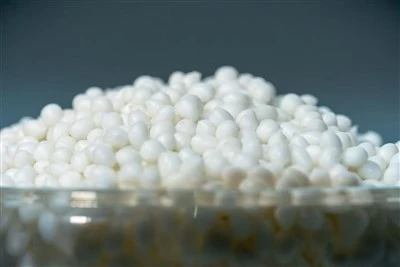
First, let’s start with basics: electrical insulation is a material’s ability to resist the flow of electric current, preventing short circuits, electrical arcing, or shock hazards. For a polymer to serve as an insulator, it needs a high volume resistivity (the core metric here, measured in ohm-centimeters or Ω·cm) and excellent dielectric strength (how much voltage it can withstand before breaking down and conducting current). A lot of flexible materials used for insulation—like PVC, silicone rubber, or standard thermoplastic polyurethanes (TPUs)—fall short in one or both of these areas, especially under harsh operating conditions. TPEE, though, is a unique block copolymer made of rigid polyester hard segments and flexible polyether soft segments, and that molecular structure is the foundation of its superior insulation.
Let’s dive into the numbers, because that’s where real performance becomes clear. At room temperature (23°C, or 73°F—standard test conditions for polymer insulators), commercial-grade TPEE has a volume resistivity ranging from 10¹⁴ Ω·cm to 10¹⁶ Ω·cm. For context, PVC (a common default for wiring insulation) typically checks in at 10¹² Ω·cm to 10¹³ Ω·cm, while silicone rubber hovers around 10¹³ Ω·cm to 10¹⁴ Ω·cm. The higher the volume resistivity, the better the insulation, so TPEE’s 100 to 10,000 times higher resistance than these alternatives is a big deal for parts that need to stay safe even in close proximity to live wires.
Dielectric strength is another critical metric, and TPEE doesn’t disappoint here either. Standard unfilled TPEE has a dielectric strength of around 25 to 35 kV/mm (kilovolts per millimeter of material thickness). By comparison, PVC is usually 20 to 28 kV/mm, and general-purpose TPU falls at 15 to 25 kV/mm. That means a 1mm thick TPEE insulation jacket can withstand 25,000 to 35,000 volts before breaking down, whereas the same thickness of PVC tops out at 28,000 volts. For applications like high-voltage automotive wiring or industrial control panels, that extra buffer against electrical failure is non-negotiable.
But here’s what makes TPEE truly useful for real-world use, not just lab tests: it retains these insulation properties even when exposed to conditions that make other insulators degrade. Let’s talk about temperature first, because electrical components often operate in extreme heat. For example, under-the-hood automotive parts can see temperatures ranging from -40°C (-40°F) in cold climates to 150°C (302°F) during summer driving. Most flexible insulators take a hit at high heat: PVC starts to soften and its volume resistivity drops sharply above 80°C, while TPU can degrade and crack at temperatures over 100°C. TPEE, though, is designed for that kind of thermal stability. Our standard industrial-grade TPEE maintains a volume resistivity above 10¹³ Ω·cm even at 120°C, and high-temperature grades we carry can go up to 150°C without significant insulation loss. We recently worked with a client who was switching their electric vehicle’s battery wiring harness from PVC to TPEE because their initial PVC harnesses were failing after 18 months in Arizona’s 110°F ambient temperatures, with insulation resistance dropping by 90%. The TPEE harnesses we supplied have been running for 3 years without measurable insulation degradation, and that’s exactly the kind of long-term reliability we prioritize.
Moisture is another big enemy of electrical insulation. Water is a conductive material, so when insulators absorb moisture, their volume resistivity drops, and they become more prone to short circuits. For marine electronics, outdoor power tools, or underground wiring, this is a major issue. TPEE is hydrophobic—meaning it repels water—thanks to its polyester backbone, so it has very low water absorption. Standard TPEE absorbs less than 0.2% of its weight in water after 24 hours of immersion at 23°C, compared to PVC which absorbs around 0.3% and some TPUs that can absorb up to 1%. We’ve tested this ourselves in our in-house lab: after 7 days of immersion in saltwater (to simulate marine conditions), a sample of our marine-grade TPEE had a volume resistivity of 8 x 10¹³ Ω·cm, while a comparable PVC sample dropped to 2 x 10¹¹ Ω·cm, putting it at risk of electrical failure. That’s why boat manufacturers consistently choose TPEE for wiring and connector housings, and why we’re the go-to supplier for those parts in our region.
Chemical exposure is another factor that often gets overlooked, especially for industrial parts that might come into contact with oils, solvents, or cleaning agents. Many manufacturing facilities use harsh chemicals to clean equipment, and if an insulation material degrades when exposed to these chemicals, it can crack, tear, or lose insulation properties. TPEE is highly resistant to a wide range of hydrocarbons, oils, greases, and common industrial chemicals, which makes it far more durable than alternatives like PVC, which can soften or crack when exposed to mineral oils. We had a client in the agricultural equipment sector who was having issues with their tractor wiring insulation cracking after exposure to diesel fuel and farm chemicals. They tried PVC, silicone, and even cross-linked polyethylene before switching to TPEE we supplied, and after 2 years of field testing, the TPEE insulation showed no signs of chemical degradation, with insulation levels remaining well within industry safety standards.
Now, let’s address a common misconception: TPEE isn’t just a rigid insulator. Unlike hard engineering plastics, TPEE is thermoplastic, which means it can be melted and formed through injection molding or extrusion—just like PVC or TPU—so it’s ideal for flexible parts. That means you can mold a TPEE connector housing that’s flexible enough to withstand thousands of bends (something PVC can’t do without cracking) while still providing the same, if not better, insulation properties as hard epoxy or thermoset insulators. That combination of flexibility, insulation, and processability is why TPEE has grown in popularity over the last decade, as manufacturers want parts that can perform across multiple requirements without sacrificing quality.
Of course, TPEE isn’t perfect, and as a supplier, I’m honest with clients about that. One limitation is that while standard TPEE is a good insulator, it’s not suitable for the highest-voltage applications (like transmission lines) that use specialized cross-linked polymers. For those uses, we work with our manufacturing partners to blend TPEE with other additives to boost dielectric strength, but we always clarify that it’s designed for lower-voltage, high-flex applications like consumer electronics wiring, automotive wiring harnesses, and industrial control panels. Another consideration is that TPEE is more expensive than some lower-grade PVC or TPU, but the trade-off in longer part life, lower failure rates, and reduced warranty costs makes it a better investment for most manufacturers.
As a supplier, we don’t just sell TPEE resin and parts—we work with our clients to match the right TPEE grade to their specific application. For example, if you need a TPEE for a consumer electronics headphone cable that needs to stay flexible for thousands of bends, we recommend a low-modulus, high-flex TPEE with volume resistivity above 10¹⁵ Ω·cm. If you need a TPEE for an under-the-hood automotive connector that needs to withstand 150°C and oil exposure, we can provide a heat-stabilized, oil-resistant grade that maintains insulation properties even in those harsh conditions. Our in-house lab does testing on every batch we supply, so we can provide full test data on volume resistivity, dielectric strength, temperature resistance, and moisture absorption to every client, which is something many smaller suppliers can’t offer.
I’ve been in this industry long enough to know that when it comes to electrical parts, reliability isn’t something you want to cut corners on. A short circuit in a car wiring harness can lead to a fire; a failed marine connector can cause a boat to sink; a faulty industrial control panel can shut down a factory for days. TPEE’s combination of high, stable insulation properties across temperature, moisture, and chemical exposure is why it’s become the material of choice for so many manufacturers who need parts that perform when it counts.
If you’re working on a project that needs flexible, long-lasting electrical insulation and want to learn more about our TPEE grades, or if you’re looking to switch from a less reliable material to TPEE for your parts, I’m here to help. We have decades of experience working with clients across different sectors, and we can provide custom grades, test data, and support to make sure you get the right product for your needs. Reach out to our team to start a conversation about your next project.
TPE References
- ASTM D257, Standard Test Method for DC Resistance or Conductance of Insulating Materials
- ASTM D149, Standard Test Method for Dielectric Breakdown Voltage and Dielectric Strength of Solid Electrical Insulating Materials at Commercial Power Frequencies
- “Thermoplastic Elastomers for Electrical Applications”, Society of Plastics Engineers, 2021
- “Electrical Insulation Properties of Thermoplastic Polyester Elastomers Under Harsh Environmental Conditions”, Journal of Applied Polymer Science, 2019, Vol. 136, Issue 22
Kunshan Kesun Polymer Co., Ltd.
Kunshan Kesun Polymer Co., Ltd. is one of the most professional TPEE manufacturers and suppliers in China, featured by quality products and low price. Please feel free to wholesale bulk eco-friendly TPEE from our factory. Contact us for customized service and free sample.
Address: No.108,Jinmao Road,Zhoushi Town,KunShan ,Jiangsu,China
E-mail: melody_yang@kesuntpe.com
WebSite: https://www.kesun-tpe.net/
