If you’ve ever stood on a job site watching a trailer-mounted drilling rig roll in—all heavy steel, humming hydraulics, and a drill mast towering above the trucks around it—it’s easy to think, “That looks like just another big machine.” As someone who’s spent the last 12 years selling, installing, and troubleshooting these rigs, I’m here to tell you there’s a whole lot more to operating one than just flipping a switch and pulling a trigger. It’s not hard in the same way driving a car is easy, but it’s exponentially more complex, because a single misstep doesn’t just mean a flat tire or a fender bender—it can ruin a job site, damage tens of thousands of dollars in equipment, or even put the crew in danger. Let me break down what it actually takes to run one of these rigs, from the day you drive it off our lot to the moment you’re drilling that first production well. Trailer-mounted Drilling Rig
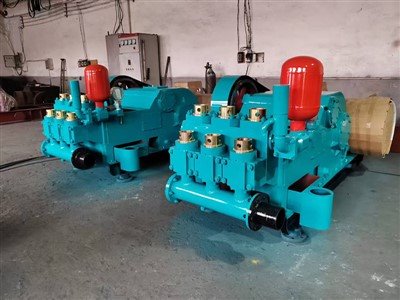
First, there’s the pre-operation preparation, and I can’t overstate how non-negotiable this step is. I’ve seen new operators skip it because they think they’re saving time, and I’ve seen experienced operators rush through it because “I’ve run these for 20 years, I know what I’m doing.” Neither way works. A trailer-mounted drilling rig isn’t like a backhoe you haul behind a pickup; it’s a self-contained system that combines a hydraulic power unit, a drill mast, a rotating head, mud mixing pumps, and sometimes a cementing unit—all mounted to a heavy-duty trailer that has to be level, stable, and anchored before you even touch the drill bit. The day a customer of ours sent a new crew to pick up a rig and drill their first well? They skipped the ground assessment, set up on soft clay that looked solid from the road, and when they extended the outriggers, the trailer sank 18 inches to the left. By the time they got it jacked back up and re-leveled, the mast was slightly off plumb, and the first 100 feet of well had to be abandoned. That’s $12,000 in wasted drilling time, not to mention the extra labor. Good operators don’t just check oil and tire pressure (though that’s part of it); they have to do a full site survey: test the ground bearing capacity with a cone penetrometer, map underground utilities (gas lines, sewer lines, fiber optic cables) with a locator, and confirm that the trailer’s wheel chocks are in place, the outrigger pads are the right size (too small and they punch into the dirt, too big and they slip on rock), and the mast is secured to the trailer’s frame with torque wrenches to make sure nothing shifts during operation. For a new operator, that’s 2 to 3 hours of work before they even start the engine. Experienced operators? They still take 90 minutes, because they know the cost of cutting corners.
Once you’re set up, the next layer is the actual drilling process, which is where most of the real skill comes in. Trailer-mounted rigs are designed for a range of applications: water wells, geothermal wells, soil sampling, even horizontal directional drilling for small utility lines. But each application has its own parameters, and the system has to adjust constantly to what’s happening underground. Let’s talk about a typical water well drilling job, which is the most common use for the rigs we supply. You start by rotating the drill string—those steel pipes that connect the mast to the bit—while pumping drilling mud down the center of the string. The mud does three things: it cools the bit, carries rock cuttings back up to the surface, and builds a hydrostatic pressure that keeps the well from caving in. The operator has to monitor three real-time metrics nonstop: weight on the bit (how hard you’re pressing the bit into the rock), rotation speed, and mud pressure. If you press too hard with a tough rock formation like granite, the drill string will twist, and the bit will break, costing thousands of dollars to replace and several days of downtime. If you go too fast in soft sand, the mud pressure drops, the well walls cave in, and you have to pull the entire drill string out to ream the well. I once had an operator tell me he can tell what type of rock he’s drilling by the sound the drill string makes over the hydraulic motors— that’s 10 years of listening to vibrations and adjusting pressure in millisecond increments. It’s not something you learn in a 3-day training course. We do 5-day hands-on training for every new operator that buys our rigs, and by the end of that week, most of them can run the rig in ideal conditions. But put them in a job site with variable rock, or a site where the mud pump is acting up, and they’re still fumbling.
Then there’s the problem of variable conditions on the job site, which is the biggest wildcard for any drilling rig, trailer-mounted or otherwise. Unlike a fixed rig at a permanent well pad, trailer-mounted units have to be transported from site to site, so they’re built to be compact, but that compactness means they’re more sensitive to small changes in environment. Last year, we sold a rig to a geothermal drilling company that was working in the Rocky Mountains, where sites are often on steep, uneven terrain. One week, their operator was drilling on a slope of 12 degrees, and when he extended the outriggers, the hydraulic system worked, but the load on the mast was asymmetric. Halfway through drilling, the mast’s tilt sensor triggered an alarm, but the operator was rushing to meet a deadline, so he hit the “override” button. Within 15 minutes, the drill string bent, and when they tried to pull it out, it got stuck. It took a 20-person crew and a custom fishing tool 3 days to extract the damaged string, and the job was two weeks behind schedule. That’s not a failure of the rig—it’s a failure of the operator to recognize that even small terrain changes affect the rig’s center of gravity. Trailer-mounted rigs are also smaller, so they don’t have the same stability as large, truck-mounted or permanent rigs. If you’re working in wind gusts over 20 miles per hour, the mast will sway, and that sway adds stress to the drill string. We’ve had operators push through wind warnings and end up with a broken mast. It’s not that the rig can’t handle wind—it’s that operating on variable terrain, in extreme temperatures, and in unexpected weather requires constant, split-second decisions that can’t be programmed into a control panel.
Now, let’s talk about technology, because modern trailer-mounted drilling rigs are nothing like the ones we sold 10 years ago. Our current models have touchscreen displays, GPS for site mapping, automated mud mixing, and even remote monitoring that lets our technicians diagnose issues from our office. For some people, that’s made operating the rig easier—they don’t have to calculate mud flow rates manually, and the computer will alert them if pressure is too high. But for other operators, that technology has raised the bar. A few years ago, we had a customer with a rig that had a brand-new automated control system, and their operator quit because he couldn’t “work with the machine” like he could with the old manual controls. The automated system would make small adjustments that felt too slow, or too aggressive, for his style of drilling. The reality is that the technology is a tool, not a replacement for skill. If you don’t understand how the mud interacts with the rock, or how the drill string’s material properties work, the automated alerts are just noise. I’ve seen new operators rely so much on the touchscreen that they don’t notice when a hydraulic hose is leaking, or when the outrigger is sitting at an angle, because the screen isn’t showing that data. At the end of the day, the rig is only as good as the person using it.
Safety is another layer that adds to the difficulty, and it’s one that a lot of people overlook. Drilling rigs are heavy, they use high-pressure hydraulics, and drill strings can weigh several tons. A single mistake can lead to serious injury or worse. The Occupational Safety and Health Administration (OSHA) has over 20 specific standards for drilling rig operation, covering everything from lockout/tagout procedures when maintaining the rig to fall protection when climbing the mast, and proper lifting techniques when handling drill pipe. For a trailer-mounted rig, you also have to comply with road transport regulations—different states have different weight limits, height limits, and requirements for lighting when moving the rig between sites. I had a customer a few months ago who got stopped by a state trooper while moving a rig, because his mast was too high for that state’s road regulations, and he didn’t have a permit. The trooper fined him $1,200, and delayed his job by two days. That’s not just a hassle—it’s a financial hit that can make or break a small drilling company. Operators also have to manage the hazards at the job site: controlling mud runoff to avoid contaminating local water sources, properly disposing of drill cuttings, and making sure bystanders stay at a safe distance during drilling. For a small drilling company with 2 or 3 crews, one operator has to handle all of these responsibilities, in addition to operating the rig, which means multitasking on a level most 9-to-5 workers never have to do.
So, how difficult is it really to operate a trailer-mounted drilling rig? It’s not rocket science, but it’s not something you can pick up in a week. We’ve had customers who got a buddy with a little experience to show them the basics, and they drilled a small residential water well without any major issues. But we’ve also had customers who spent $150,000 on a rig, hired a new operator with no drilling experience, and spent the first six months fixing avoidable mistakes. The biggest difference is understanding that this isn’t a piece of construction equipment—it’s a precision system that combines mechanics, hydraulics, geology, and logistics. A good operator doesn’t just push buttons; they anticipate problems, adjust to changing conditions, and prioritize safety over speed. For our part, we don’t just sell rigs—we provide ongoing training and support, because we know that even the best rig in the world is useless without a skilled operator. If you’re in the market for a trailer-mounted drilling rig, don’t just look at the price or the features. Ask about the training, the technical support, and the real-world experience our team has helping operators solve problems on job sites, not just in our showroom. Every job site is different, and every operator is different. But with the right preparation, training, and knowledge, running one of these rigs is doable. Cut corners, and you’ll pay for it, in money, time, or safety. If you’re ready to talk through your specific needs, our team is here to help you find the right rig and the support you need to get the job done right. We look forward to discussing how we can support your drilling operations.
Water Well Drill Pipe References:
- Occupational Safety and Health Administration. (2022). Safety and Health Regulations for Construction: Drilling Operations. U.S. Department of Labor.
- American Water Works Association. (2021). Drilling Methods for Water Wells: A Practical Guide for Operators. AWWA Press.
- National Ground Water Association. (2020). Trailer-Mounted Drilling Rig Best Practices for Site Setup and Operation. NGWA Publications.
- International Association of Drilling Contractors. (2023). Operator Competency Standards for Small-Rig Drilling Operations. IADC Safety Committee.
Hebei Zhongxin Machinery Equipment Co., Ltd.
As one of the most experienced trailer-mounted drilling rig manufacturers in China, we also support customized service. We warmly welcome you to buy high quality trailer-mounted drilling rig for sale here from our factory. If you have any enquiry about pricelist, please feel free to email us.
Address: Wangxizhang Industrial Zone, Zhao County, Shijiazhuang City, Hebei Province, China
E-mail: zxnjbzg@163.com
WebSite: https://www.hbzxdrilling.com/
