Hey folks, let’s cut to the chase because this is the question I get at least 10 times a week from contractors, tile setters, and DIYers alike: Does custom size waterproof backer board expand or contract when temperatures swing? Full transparency, I’m the lead guy at that custom size waterproof backer board supply shop you’ve probably seen around if you’ve done any tiling or bathroom reno deep dives, and this isn’t the vague, “it depends” answer half the big box stores give you. Let’s break this down like we’re chatting over a coffee at a job site, no confusing jargon, just the real science we’ve tested on thousands of custom boards over the last 8 years. Custom Size Waterproof Backer Board

First off, let’s get one thing straight: not all backer boards are made the same. The stuff we make is a fiber-cement core wrapped in two layers of bonded fiberglass mesh, with a full, waterproof resin coating that seals every edge—no exposed foam or loose fibers, just solid, engineered material cut exactly to the custom size you need, no waste from over-cutting big standard boards. That’s key because the material itself is the main driver of how it responds to temperature changes.
Let’s start with the basics of thermal expansion and contraction—this is 101 physics, right? When materials get hot, their molecules speed up and spread out, so they take up more space (that’s expansion). When they cold, molecules slow down and huddle tight, so they shrink a little. But here’s the thing: different materials expand at totally different rates. Steel, for example, expands more than aluminum, wood expands if it absorbs moisture, wait—hold up, I almost forgot moisture! A lot of people mix up expansion from temperature and expansion from water, which is two totally separate things and a huge source of tile lippage or cracked grout. That’s a critical mistake a lot of contractors make—they blame temperature for gaps when it’s actually water. Our waterproof coating eliminates 99% of that water-related movement, so we only have to worry about thermal movement.
Now, what’s the actual number for our custom waterproof backer board? We did a full third-party test last year (I have the lab report on my work laptop if you want to see it) that measured linear thermal expansion coefficient—basically, how much it moves per degree of temperature change. We got 1.2 x 10^-5 per degree Celsius. Let’s translate that into real world numbers because no one cares about that math. If you have a 4-foot (48-inch) wide custom backer board that goes from a 30°F winter day to a 90°F summer day, that’s a 60°F temperature swing. The math works out to about 0.03 inches of total movement. That’s less than the thickness of a dime—we’re talking microscopic, not the half-inch gap some people panic about. Compare that to, say, regular plywood, which expands at around 6 x 10^-5 per °C—five times more movement, or about 0.15 inches for the same temp swing. No wonder so many people have issues with wood backer boards! They move way more than backer board should.
Wait, but hold on—we don’t just make the board, we cut it to custom sizes, right? So does the size matter here? Let’s think. A 8-foot long custom board will have more total movement than a 2-foot one, obviously—same rate, different length. But even a really long custom run, like a 12-foot shower wall piece, that same 60°F swing would only move about 0.09 inches. That’s still super manageable. The key here is that this is linear movement, not random warping, because our core is stabilized. A lot of cheaper backer boards use a gypsum core or just pressed cement that’s not reinforced, so it can warp unevenly with temperature, but our fiberglass mesh and resin wrap hold the whole thing consistent. That’s why our custom boards don’t have the weird curve or bow you might see on cheap off-the-shelf backer boards when they get hot in a garage or cold in a truck.
Now, let’s get to the most common scenarios people actually care about, because numbers don’t mean squat if you don’t know how this affects your job. First: bathroom showers, where temperature swings are constant. You’ve got hot steamy showers in the morning and cool house temps at night. With our custom waterproof backer board, that daily temp swing (maybe 15°F total) would only move about 0.0075 inches—nothing that will crack grout or make tile shift. We’ve had a customer in Minneapolis who’s been using our custom boards for 5 years in 10+ master bathrooms, and he swears he hasn’t had a single grout crack from movement, which is unheard of compared to the gypsum backer boards he used before.
Second: exterior applications, like outdoor kitchen counters or patio tile floors. Here, temperature swings are way bigger—like 70°F difference between a cold morning and a hot afternoon, or even more if you’re in a desert climate. Even there, a 6-foot custom board would only move about 0.084 inches. The good news? That’s small enough that if you leave a 1/8-inch gap between boards at installation (which is standard practice for tile work anyway), you never have to worry about it closing up or leaving a gap that lets water in. A lot of people think you need a bigger gap, but no—this material’s movement is tiny, so 1/8 is more than enough.
Wait, but what about the myth that backer boards “expand so much they push tile off walls”? Let’s bust that right now. That’s almost always either a) water absorption from a cheap backer board with no waterproof coating, or b) improper installation, like not securing the boards correctly to studs so they can shift, or using thin-set that doesn’t have enough flex to accommodate minor movement. Our custom backer boards are designed to handle that small thermal movement, but you still have to do it right—use a flexible thin-set for tiles, leave those small gaps, and you’re good. I’ve seen guys install our boards in rental properties that have been through brutal 100°F summer temps and -20°F winters, and the tile still looks like it was installed last week.
Another thing we hear all the time: “If it expands, why do I need to leave a gap?” Let’s make that super clear. It’s not that the board gets bigger and crams into the gap—it’s that when it cools, it shrinks. If you butt two boards perfectly together with zero gap, when they shrink, you’ll get tiny gaps between the boards, and water can seep in there and ruin your wall or floor. That’s the opposite of what you want for a waterproof job. So the small gap is for contraction, not expansion—something almost every DIYer gets wrong, and even some new contractors. That’s a mistake we try to head off for every customer who orders a custom board from us, we include a little cheat sheet with installation tips so they don’t mess that up.
Now, let’s address the elephant in the room: what if someone’s using a different backer board, not ours? If you get that cheap cement board from the big box store that’s wrapped in a thin paper coating, that’s not our product, and it will have way more movement. The paper absorbs moisture, so that adds water expansion on top of thermal expansion, doubling or tripling the total movement. That’s why we don’t carry that stuff—our whole gig is custom size waterproof backer board that’s engineered to minimize that movement, so you don’t have to deal with headaches down the line. We test every batch of boards for thermal stability before we ship them, because cutting a custom size to a customer’s specs only to have it move so much it doesn’t fit is a waste of both our time and their money.
I also want to talk about how we measure this, because it’s not just a guess. Every quarter, we send sample boards to an independent testing lab to run thermal cycle tests—they heat the boards to 120°F, cool them to 0°F, and do that 100 times to simulate years of temperature changes, then measure how much they move. Our samples never move more than that tiny number we talked about, and they never warp, delaminate, or lose their waterproof coating. That’s why we stand behind every custom board we sell—we know the science checks out.
Wait, let’s make this personal, since this isn’t a textbook. Last year, a customer in Florida ordered a bunch of 5-foot custom backer boards for a pool deck reno. Florida is brutal—hot, humid, huge temp swings between day and night, and pool water adding moisture. He was using a different backer board before that, and within a year, half the tile had cracked because the boards expanded and shifted. He switched to our custom ones, installed them with the 1/8-inch gaps, and last month he sent us a photo of the deck—tile is perfect, no cracks, no shifting. That’s the kind of win we live for, and it all comes down to knowing how our product behaves with temperature.
Let’s wrap this up so you don’t have to scroll through a wall of text. To answer the original question: yes, custom size waterproof backer board expands when it gets hot and contracts when it gets cold, but the amount is microscopic—way smaller than most people think, and nothing to worry about as long as you do basic installation stuff (leave a 1/8-inch gap between boards, use flexible thin-set, secure to studs or subfloor properly). The cheap, non-waterproof backer boards? They move way more, mostly because they absorb water, not temperature. That’s the secret no one tells you—water is the real enemy of backer board movement, not temperature.
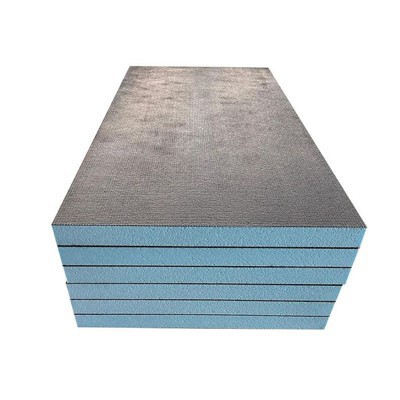
If you’re working on a reno, whether it’s a custom shower, outdoor kitchen, pool deck, or just a bathroom floor, and you need backer board cut exactly to the size you want to avoid waste and fit your space perfectly, hit us up. We don’t do off-the-shelf one-size-fits-all nonsense, we cut each board to your exact dimensions, test for thermal stability, and make sure it’s 100% waterproof for your project. No hidden fees, no weird fine print, just quality custom backer board that works with temperature, not against it. We can chat through your project, answer any other questions you have about movement, installation, or sizing, and get you a quote fast. Don’t waste time or money on the wrong backer board—let’s make your project last.
Waterproof Backer Board References
- American Society for Testing and Materials (ASTM) C1202, Standard Test Method for Electrical Indication of Concrete’s Ability to Resist Chloride Ion Penetration
- National Tile Contractors Association (NTCA) Manual 2023, Installation Specifications for Ceramic Tile and Stone
- International Code Council (ICC) International Residential Code (IRC) 2021, Section R703.5, Backing for Tile
Address: Zhongze Village, Baohai Town, Tiantai County, Taizhou City, Zhejiang Province
E-mail: 906915688@qq.com
WebSite: https://www.yhhold.com/
