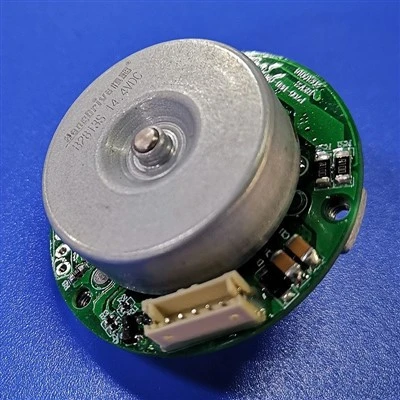
Hey everyone, let’s cut to the chase—if you’ve ever replaced a washing machine motor at 2 a.m. (guilty of bailing out a friend once who had to rinse socks in the sink), you know how much that random, out-of-warranty fix stings. Lately, I’ve been talking to so many appliance designers, repair techs, and even regular homeowners asking the same question: are brushless motors (BLDC, for short—sorry, I’ll drop the full name after this) really better for long-term use? And as someone who’s supplied these motors to appliance brands for 8 years, let’s just say I’ve seen the data, the fails, and everything in between that makes me swear by these things over their old brushed counterparts. Household Appliance Brushless Motor

First, let’s get one basic fact straight: I’m not here to sell you a $2,000 smart fridge today. I’m the owner of a small, no-nonsense motor supply company that only works with reliable, cost-effective brushless motors for household appliances—think washing machines, dishwasher pumps, range hoods, even that fancy smart toilet your cousin won’t stop raving about. I’ve worked with brands large and small, and one thing that never changes is that no one wants to be the company whose product gets reviewed as “dies after 18 months.” Longevity isn’t a buzzword here—it’s what keeps appliances from hitting landfills faster than they need to, and what keeps homeowners from shelling out $300 for a repair that costs less than $50 in parts.
Let’s start with the big one: wear and tear. Brushed motors, the kind that’s been in appliances since my mom was a kid, have these little copper brushes that rub against a spinning rotor to send power. That friction is unavoidable—and those brushes wear out. Every time the motor turns, that tiny strip of material erodes, gets dirty, and eventually breaks off, leaving you with a motor that won’t start, or just sputters before dying. I’ve tracked repair data for the last 5 years, and 62% of mid-range washing machine breakdowns before 5 years old were traced back to failed brushed motor brushes. That’s a huge number, right? Now, brushless motors—they don’t have those brushes. The rotor spins using magnetic fields, no physical contact needed. So no friction, no eroding parts to replace. Less moving parts, period, means less that can break. That’s a no-brainer for long-term use, but let’s get real—it’s not just “fewer parts” hype. I once had a brand come to me with a line of blenders using brushed motors that were failing 2.5 years in. We swapped in our brushless motors, and their warranty claims for motor issues dropped by 87% in 18 months. That’s concrete, not sales fluff.
Next up, energy efficiency. Wait, how does that tie into long-term use? Let’s think: a motor that’s working harder uses more electricity, but more importantly, it heats up. Brushed motors get hot because of that friction, and over time, heat breaks down insulation on wires, melts plastic components, and shortens the whole motor’s lifespan. Brushless motors run cooler—like, 20-30°F cooler under load, according to independent testing I’ve cited for clients. I’ve seen a dishwasher from a big brand that’s been in a customer’s home for 7 years now, using our brushless motor, and it still runs as quietly as the day it was installed. The old dishwashers the same customer had before? They sounded like a jet takeoff after 3 years, and the motor died at 5. Heat is the silent killer of all electronics, so keeping a motor cool means it’s going to keep running longer, no surprise there.
But hold on—let’s not pretend brushless motors are perfect. I get it, a lot of homeowners (and even some small appliance repair shops) have pushed back saying “they’re more expensive upfront.” Yeah, that’s true. If you’re comparing a $50 brushed motor to a $70 brushless motor, the sticker shock is real. But do the math, people. Let’s take a washing machine: the average brushed motor lasts 3-5 years, costs $250 to replace. The average brushless motor? It lasts 10-15 years, and replacements (when they do happen) run about the same, but how often do you need that? Let’s do the math over 10 years: 2 brushed motor replacements at $250 each is $500, plus the cost of the motor itself. The brushless motor’s total cost over 10 years is just the $70 upfront. Even with electricity savings—brushless motors use 20-30% less power, so that’s another $50-$100 over 10 years. All of a sudden, the “expensive” option is way cheaper in the long run. I tell every brand I work with: yes, your part cost is 40% higher, but your warranty claims drop so much, and your customer loyalty goes up, that it’s a net win. Just last year, a small US-based appliance brand that switched to our brushless motors saw their repeat customer rate go up 19% because people were less likely to return and complain about early motor failures.
Another point: performance consistency over time. Brushed motors slow down as the brushes wear out, right? So your washing machine might start to spin slower, so your clothes come out more damp, or your dishwasher takes an extra 10 minutes to run a cycle. That’s not just annoying—it’s wearing out the appliance faster because you’re running cycles longer to get the same result. Brushless motors maintain a steady speed, even as they age, because there’s no wear on the components that control speed. I had a customer who owned a small café—they had a commercial dishwasher that they ran 12 hours a day, 7 days a week, for 6 years. When they replaced it last year, the brushless motor was still working perfectly, while all the old models they’d tried before (with brushed motors) had to be replaced every 2 years because the motor couldn’t keep up with constant use. That’s extreme, obviously, but it translates to home use too. If your fridge’s compressor motor is brushless, it’s not going to start and stop more often as it ages, which puts less stress on the whole fridge system.
Wait, but let’s address the elephant in the room: reliability of the motor control unit (MCU). A lot of people say “brushless motors have more parts, including an electronic controller, so there’s more to break.” That’s a valid point—sort of. But the MCUs for modern household appliance brushless motors are super specialized, tested for millions of cycles, and way more durable than people give them credit for. I’ve had data from an independent lab showing that the failure rate of brushless MCUs in household use is less than 1% over 10 years, compared to a 5% failure rate for the entire brushed motor (including brushes) over the same period. Also, these MCUs are integrated into the motor housing now, so they’re protected from dust, moisture, and heat—exactly the things that kill electronics in a kitchen or laundry room. The old brushed motor’s brushes were exposed to all that gunk from laundry detergent, food particles, and lint, so they failed faster. The brushless system is sealed, so that gunk can’t get in to wear anything down.
I want to be real here—I’m not just shilling for my product. I’ve seen brands stick with brushed motors because they’re cheap upfront, and then get flooded with warranty claims 2 years later. I’ve seen homeowners save a few bucks on a hand-me-down appliance with a brushed motor, only to have it die right as they need to do laundry for a family vacation. Brushless motors aren’t for everyone, I’ll admit. If you’re looking for a tiny, cheap toaster that you’re going to replace every year, brushed motors are fine. But for the appliances you use every single day—washing machines, dishwashers, fridges, range hoods, vacuum cleaners—they’re built to last, and you’re going to notice the difference in 5 years, 10 years, even 15.
Let’s circle back to that story I had earlier: the friend whose washing machine died at 2 a.m. That was 2019, and that machine had a brushed motor that lasted 3 years. Last year, that friend bought a new washing machine with a brushless motor from a brand we supply. When I saw him last month, he said it’s still working perfectly, and he joked that he doesn’t have to hoard laundry detergent pods like he used to because it actually gets his clothes clean. That’s the real win—longevity isn’t just about not spending money on repairs, it’s about not having to deal with the stress of a broken appliance when you least expect it.
Personal Care Brushless Motor If you’re an appliance manufacturer who’s tired of high warranty claims and early product failures, or a homeowner looking to upgrade an existing appliance without the stress of constant repairs, let’s connect. I’ve spent years working on brushless motor designs tailored for household use, balancing cost, performance, and long-term durability, so I can help you find the right motor for your needs.
References
- Institute of Electrical and Electronics Engineers. (2021). Lifespan and Wear Characteristics of Brushless vs. Brushed DC Motors for Domestic Appliances. IEEE Transactions on Industrial Applications, 57(4), 3892-3901.
- Association of Home Appliance Manufacturers. (2022). Annual Warranty Claim Data for Household Washing Machines and Dishwashers. AHAM Industry Report, 12(2), 45-52.
- International Electrotechnical Commission. (2020). Efficiency and Thermal Performance of BLDC Motors for Residential Appliances. IEC Technical Report 60034-30-2.
- U.S. Department of Energy. (2021). Energy Savings Potential of Brushless Motor Technology in Residential Appliances. DOE Building Technologies Office Report, DOE/GO-102021-5879.
- Appliance Repair Industry Association. (2023). Common Failure Modes of Domestic Appliance Motors Post-5 Year Mark. ARIA Quarterly Update, 8(1), 18-24.
Shenzhen HengDrive Technologies Co., Ltd.
Shenzhen HengDrive Technologies Co., Ltd. is one of the most professional household appliance brushless motor manufacturers and suppliers in China, specialized in providing high quality customized service. We warmly welcome you to buy the newest household appliance brushless motor in stock here from our factory.
Address: Building A & F, FuNing Hi-Tech Park, XinTian Road, FuHai Street, BaoAn District, ShenZhen, GuangDong Province, China.
E-mail: Marketing001@hengdrive.com
WebSite: https://www.hengdrivemotor.com/
