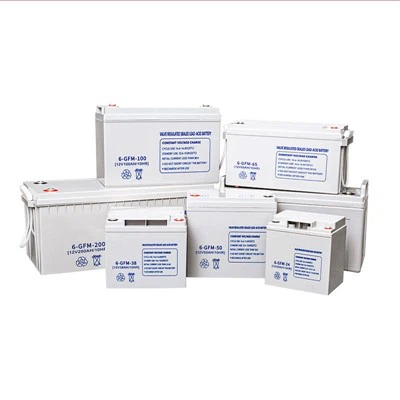
Hey there! I’m a supplier of lead – acid batteries, and one question I get asked all the time is, "What is the charging time for a lead – acid battery?" Well, let me break it down for you. Lead-Acid Battery
Factors Affecting Charging Time
First off, the charging time of a lead – acid battery ain’t set in stone. It depends on several factors.
Battery Capacity
The capacity of the battery is a biggie. Usually, it’s measured in amp – hours (Ah). A battery with a higher Ah rating will take longer to charge compared to one with a lower rating. For example, a 100Ah lead – acid battery will take more time to fill up than a 50Ah one. Suppose you’re using a charger that can deliver a constant current of 10 amps. To fully charge a 50Ah battery, in theory, it would take about 5 hours (50Ah divided by 10A). But for a 100Ah battery, it’d need around 10 hours under the same charging conditions.
Charger Output
The output of the charger you’re using matters a whole lot. Chargers come with different charging currents. A charger with a high – output current can charge the battery faster. For instance, if you’ve got a charger that puts out 20 amps, that 50Ah battery we talked about earlier might be charged in about 2.5 hours instead of 5. But be careful! Using a charger with too high a current can overheat the battery and reduce its lifespan.
Battery State of Charge
The starting state of charge of the battery also plays a role. If the battery is almost empty, it’ll take longer to charge compared to when it’s only partially discharged. Let’s say a battery is 80% discharged. It’ll need more time to reach a full charge than if it was only 20% discharged.
Battery Age and Condition
As lead – acid batteries get older, their internal resistance increases. This means that it becomes harder for the battery to accept a charge, and thus, the charging time goes up. If a battery has been damaged, say by overcharging or deep – discharging repeatedly, it can also take longer to charge.
Types of Charging Stages
Lead – acid batteries go through different charging stages, and each stage has an impact on the overall charging time.
Bulk Charging
This is the first stage. During bulk charging, the charger pumps in as much current as the battery can handle. It’s like quickly filling up a bucket with a wide – open tap. The charger will keep providing a high current until the battery voltage reaches a certain point, usually around 80 – 90% of its full charge. This stage is the fastest part of the charging process.
Absorption Charging
After the bulk charging, the absorption stage kicks in. At this point, the charger reduces the charging current and maintains a constant voltage. The goal here is to top – off the battery slowly and make sure that all the cells are fully charged. This stage takes longer than the bulk charging and is important for extending the battery’s life.
Float Charging
Once the battery is fully charged, the float charging stage starts. The charger provides a very low current just to keep the battery at its full charge level. It’s like keeping a small trickle of water in the bucket to prevent it from drying up. This stage can last as long as the battery is connected to the charger.
Common Charging Times
Now, let’s talk about some ball – park figures for common lead – acid battery applications.
Small Sealed Lead – Acid Batteries
These are often used in stuff like emergency lights and small UPS systems. A typical small sealed lead – acid battery with a capacity of around 7Ah might take anywhere from 4 to 6 hours to charge using a standard charger. But if you’ve got a fast charger, you might be able to cut that time down to 2 – 3 hours.
Automotive Lead – Acid Batteries
Automotive batteries are usually larger, with capacities ranging from 40Ah to 100Ah or more. Using a regular car battery charger that provides a charging current of around 2 – 5 amps, it could take 10 to 20 hours to fully charge a depleted automotive battery. If you’re in a hurry and use a high – current charger, you might be able to get it to a decent charge level in 2 – 4 hours, but it’s not recommended to fully charge it this way all the time, as it can put stress on the battery.
Industrial Deep – Cycle Lead – Acid Batteries
These are used in forklifts, golf carts, and other heavy – duty applications. They often have large capacities, sometimes over 200Ah. Charging these batteries can take a long time. With a standard charger, it might take 12 to 24 hours to fully charge them. Special fast – charging systems are available for industrial use, but they need to be carefully monitored to avoid damaging the batteries.
Tips to Reduce Charging Time
If you’re looking to cut down on the charging time of your lead – acid batteries, here are a few tips:
Use a Compatible Charger
Make sure the charger you’re using is designed for the type of lead – acid battery you have. Using an incompatible charger can not only increase the charging time but also damage the battery.
Keep the Battery in Good Condition
Regularly maintain your batteries. Check the electrolyte levels (if it’s a non – sealed battery), clean the terminals, and avoid over – discharging. A well – maintained battery will charge more efficiently.
Charge in the Right Environment
Batteries charge better at moderate temperatures. Avoid charging them in extreme heat or cold. If it’s too hot, the battery can overheat during charging, and if it’s too cold, the chemical reactions in the battery slow down, increasing the charging time.
Wrapping Up
So, as you can see, the charging time for a lead – acid battery is influenced by a bunch of factors. There’s no one – size – fits – all answer to how long it takes to charge a lead – acid battery.
Lead-acid Alternative Battery If you’re in the market for high – quality lead – acid batteries or need more information about charging them, don’t hesitate to reach out. We’re here to help you find the right battery for your needs and offer advice on proper charging and maintenance. Whether you’re a small business owner looking for backup power or an industrial operator in need of heavy – duty batteries, we’ve got you covered. Let’s start a conversation and see how we can work together!
References
- Linden, D., & Reddy, T. B. (2002). Handbook of Batteries. McGraw – Hill.
- Berndt, D. (1992). Lead – Acid Batteries: Science and Technology. Elsevier.
Shandong Yaoqian Energy Storage International Trade Co., Ltd.
We’re well-known as one of the leading lead-acid battery manufacturers and suppliers in China, featured by quality products and good price. Please rest assured to buy customized lead-acid battery made in China here from our factory.
Address: Lithium Battery Industrial Park, Xingcheng Street, Zaozhuang High-tech Zone, Shandong Province, China
E-mail: boss@yaoqiansmart.com
WebSite: https://www.yaoqiansmart.com/
